August 26, 2026 · 3 min read
Polarized vs. Tinted: What Actually Cuts Glare
"Dark" and "glare-proof" get used interchangeably when people talk about sunglasses, but they're not the same property, and confusing them is the most common reason a pair that looks properly dark can still leave you squinting off a windshield or a lake.
Tint reduces brightness. That's it.
A tinted lens absorbs a portion of all light evenly, regardless of the direction it's coming from. That's genuinely useful — it's most of what makes a bright day comfortable to be outside in — but it doesn't discriminate between ordinary daylight and the specific, concentrated glare bouncing off a flat surface like water, wet pavement, or a car hood. A darker tint just makes that glare dimmer, not gone.
Polarization targets glare specifically
Polarized lenses have a laminated filter oriented to block horizontally-polarized light — which is specifically the kind of light that reflects off flat horizontal surfaces. It's a targeted fix for a targeted problem, not a general brightness reducer. You can test it yourself with a pair of polarized sunglasses at a lake or on a wet road: tilt your head roughly 60 degrees while looking at the glare and it visibly cuts, in a way a tinted-only lens never will regardless of how dark it is.
Worth being straight about
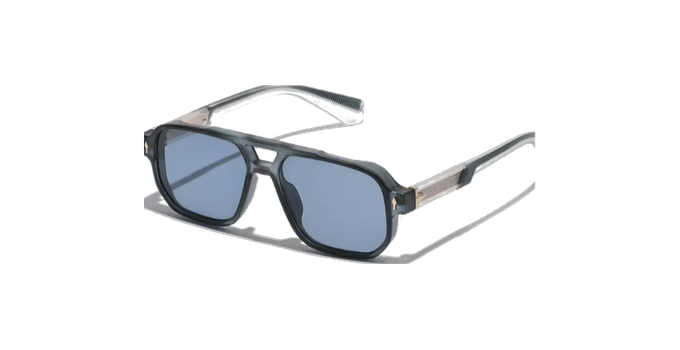
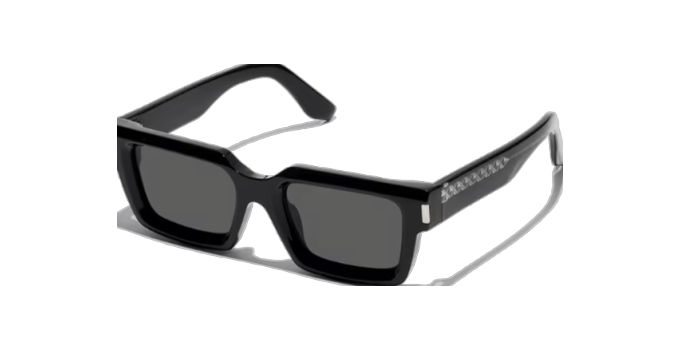
Corvelle's lenses — the steel-blue on The Solair, the smoke gray on The Windsor — are tinted, not polarized. They're genuinely good at what tint does well: cutting overall brightness without distorting color the way a fully mirrored or over-darkened lens can. If your main use case is driving long distances or time on the water where reflected glare off the windshield or the surface is the actual problem, that's a different lens technology, and it's worth knowing the difference before assuming dark automatically means glare-proof.
One tradeoff worth knowing if you do go polarized elsewhere: polarized lenses can make LCD screens — car dashboards, some phone screens — hard to read at certain angles, because those screens emit polarized light too. Neither option is strictly better. They're built for different problems.